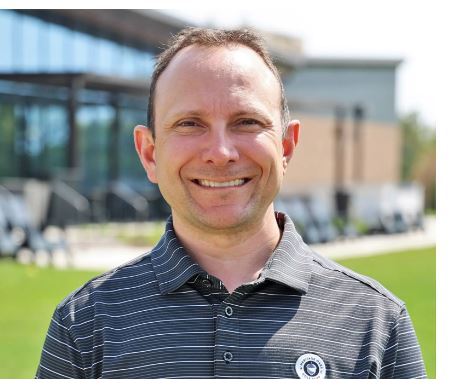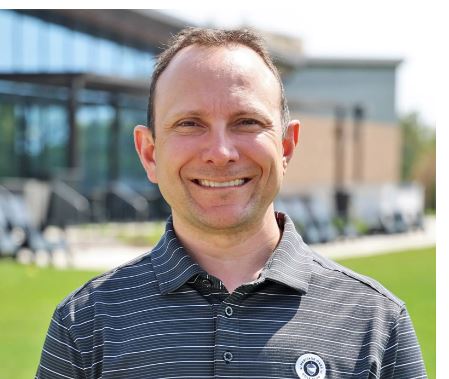
Michael Wenzel
Northbrook Golf Academy at Heritage Oaks Golf Club
3535 Dundee Rd, Northbrook, Illinois 60062, US
(847) 291-2351
https://www.heritageoaksgc.com/
mwenzel@nbparks.org
Please indicate past awards won/recognitions:
GRAA Top 100 Growth of the Game Teaching Professional, Golf Digest Best in State, Other (Indicate specific awards below in 3-a)
Other awards won:
U.S. Kids Master Kids Teacher – 2014, Golf Digest Best Young Teachers in America 2018-2019, 2011 IPGA Junior Golf Leader
Total number of individual lessons given per year:
Male: 300 – 1/2 hr. lessons
Female: 100 – 1/2 hr. lessons
Junior: 950 -1/2 hr. lessons
Total number of individual clinics given per year:
35
Please indicate any Growth of the Game initiatives your facility/academy has launched over the past year (please give specifics on such programs):
Over the past year, our academy has continued to focus on creating more opportunities for juniors to play, compete, develop, and stay engaged with the game at every stage of their development. Our goal is to create a pathway that allows young golfers to progress naturally from introductory programs into competitive golf while keeping the experience fun, social, and accessible.
9-Hole Teen League
One of our newest initiatives was the development of a 9-Hole Teen League for players who have graduated from our 13U PGA Jr. League program and are looking for an opportunity to play with older juniors rather than participating in our traditional youth house league.
We initially piloted the program in the fall with just four players. Based on the response, we expanded it to 11 players in the spring and eight players in the fall.
We also redesigned the format this year to provide more actual playing experience. Our original format consisted of two two-hour practices and four matches over six weeks. This year, we incorporated 30-minute practices and, on alternating weeks, had the players compete in 9-hole rounds on our dedicated 9-hole course. This provided a more natural transition from instruction to independent course play and competition.
PGA Jr. League
PGA Jr. League continues to be our most popular summer program, with 70 participants this year. The growth of the program allowed us to field two teams that advanced to the playoffs.
Because of the popularity of the summer season, I also offered a late-season PGA Jr. League team for the second consecutive year. Nineteen players continued playing for an additional four weeks, providing an opportunity for juniors to extend their season rather than ending their competitive experience when the traditional summer session concluded.
Summer Travel Stroke Play League
I also brought back our Summer Travel Stroke Play League. We had hoped to partner with another academy, but when that academy had to withdraw at the last minute, I decided to continue the program because we already had a full team of 8 players who were excited to compete.
Rather than canceling the opportunity, we created our own schedule and traveled to several local-area courses. Each week, players earned points based on their finish, with the cumulative standings determining our Player of the Year. We incorporated prizes and merchandise credits for the league winners.
This program provided juniors with something that is difficult to replicate in traditional instruction: the opportunity to compete on different courses, experience different conditions, learn to manage their own games, and develop resilience through competition.
18-Holers
I also continued doing 18-Hole Playing Lessons with private lessons students, which is designed to prepare them for high school golf. We play throughout the year and it provides an important progression from our 9-hole youth travel league to full 18-hole competition.
This transition is particularly important for seventh and eighth graders preparing for high school tryouts. Many junior golfers are comfortable playing nine holes, but moving to 18 holes represents a significant physical, mental, and strategic adjustment.
While the players compete, I actively coach them on the course, providing guidance on course management, club and shot selection, and the mental side of the game. We discuss how to recover after a poor shot or bad hole, reset mentally, and make better decisions on the next shot.
This year, 10 of our players earned spots on their high school teams. Beyond the individual accomplishment, this helps strengthen the competitive golf programs at our local schools and demonstrates the value of creating a structured pathway from junior golf into high school competition.
Girls Golf Clinics
During the winter, we continued our Girls Golf Clinics at our indoor facility. The facility includes three hitting areas equipped with technology: two utilizing the Full Swing KIT Launch Monitor and Simulator, and a third utilizing TrackMan in a 15' x 15' x 10' hitting cage.
Participation grew significantly, from 18 girls the previous winter to 51 girls this past winter. The program provided an opportunity for girls to remain connected to golf during the offseason while also creating additional teaching opportunities for our LPGA professional.
The growth of this program has been particularly encouraging because it demonstrates how providing a welcoming, social, and technology-enhanced environment can help young female golfers remain engaged with the game year-round.
Building a Stronger Golf Community
Growth of the game also extends beyond junior programming. Under my direction, we created opportunities for our academy and golf course staff to play and interact with one another through organized events.
We introduced a double-elimination match-play bracket to encourage staff members to get out and play together. Following our first social event this fall, we also created a Best Ball tournament, complete with a pairing party and pizza.
While these events are not traditional player-development programs, they have helped create a stronger sense of community among our staff, encouraged more people to play the game, and fostered greater pride and connection to the facility.
Our Overall Approach
The common thread across these initiatives is creating a pathway rather than a single program. We want a young golfer to have somewhere to go next—whether that means moving from PGA Jr. League into our Teen League, progressing from 9-hole competition to 18-hole play, continuing into high school golf, or simply finding a welcoming environment that keeps them engaged with the game.
For me, growing the game means more than introducing someone to golf. It means giving them a reason to keep playing, opportunities to build relationships, experiences that build confidence, and a clear path to their next level of development.
Please share any programming you have made to keep your customers & students engaged:
I believe the key to keeping golfers engaged is to give them a reason to come back. Throughout the year, I focus on creating programs and events that combine golf with competition, family, community, and social experiences. My goal is to provide opportunities for golfers of different ages and skill levels to continue playing while developing relationships with other members of our golf community.
Club Championships
Each year, I collaborate with our Head Professional to organize our club championships for men, women, and juniors. Following one of our strongest participation years, we looked for ways to make the junior championship even more accessible.
Rather than holding it in early August, when many families are traveling, we moved the championship to the end of July. We also changed the junior format for the last game to stroke play, giving our young golfers an opportunity to experience a traditional competitive championship format rather than the match-play/scramble format commonly associated with PGA Jr. League.
Players could choose between our Par 3 course and dedicated 9-hole course based on their age and skill level. The response exceeded our expectations, with 46 golfers competing on the 9-hole course and another 38 competing on the Par 3 course.
Parent/Child Programming
At the conclusion of each league season, I organize a Parent/Child event on our 9-hole course. These events are designed to bring families together and create a stronger sense of community around the game.
Participation grew from 25 families the previous year to 31 families this year. We offer two age divisions—11 and under and 12 and older—and structure the event so the kids are truly part of the competition. Each team is required to use at least three of the child's tee shots, as well as the child's ball on the par-3 holes.
In addition to prizes for first, second, and third place in each division, we include contests such as closest-to-the-pin and longest putt. These additional competitions give families multiple opportunities to win and keep the atmosphere fun and inclusive.
The most rewarding part is seeing the kids' excitement and the families interacting with one another. These events help turn participation in a golf program into a golf community.
Indoor Simulator League
I also oversee our 9-hole simulator league, which is played on two Full Swing Pro 2.0 Simulators. We offer both a fall and winter season, allowing golfers to continue playing competitively throughout the offseason.
The fall league runs for six weeks, while the winter league runs for eight weeks. Two-player teams compete each week based on their combined gross score while earning points toward the playoffs. Players establish a handicap during the regular season, and we apply 70% of their established handicap during the playoffs to create more competitive matches.
The program has grown significantly. Our fall league increased from 46 participants in 2024 to 70 in 2025, more than doubling the size of the program over a relatively short period. The winter league has also maintained strong participation, with 63 participants this past winter compared with 68 the previous year.
To keep the league engaging for more than just the strongest players, I added additional competitions, including men's and women's Long Drive, Longest Putt, and Closest-to-the-Pin contests. These side competitions give everyone an opportunity to win regardless of their overall league standing.
As participation increased, I expanded the playoff format from one bracket to two so that every team would have at least one playoff match. Teams earn weekly points based on their performance, and standings determine placement into our two divisions: the American Golf League Division and National Golf League Division.
Each division competes through four weeks of playoffs before the division champions meet in a final match for the Overall League Championship. We award golf shop prizes and club gift cards for the top three teams in each division, followed by a winner-take-all championship match that includes an adult beverage and appetizer for each team.
We use Full Swing FS Compete to record weekly scores, while I maintain handicaps and standings and communicate results to the participants. This combination of competition, technology, social interaction, and recognition has created a strong offseason community and gives golfers another reason to stay connected to the club.
Growing the Game Through School Partnerships
I also continued to invest time in growing the game outside of the traditional club environment. At St. Mary's School in Buffalo Grove, I volunteered additional Mondays this spring to assist with their golf club.
The program had 22 students in grades 3–8, many of whom initially had only a small interest in golf. Through their participation, many became much more interested and engaged with the game.
Each student received a school golf shirt and cap, which helped create a sense of team identity and community. The program became more successful than anticipated, and one family even told us that the golf program was a factor in their decision to transfer their child to the school.
We concluded the season with a round at Buffalo Grove Golf Course, which is within walking distance of the school, followed by a pizza party and awards ceremony.
An especially rewarding outcome has been seeing these students continue into other golf opportunities. Several participants have subsequently participated in our PGA Jr. League, Parent/Child events, and youth stroke-play tournaments at my home club. This is exactly the type of pathway I want to create—introducing someone to golf and then giving them opportunities to continue playing.
Girls Golf Outreach
This spring, we also hosted a complimentary Girls Golf Clinic in the gymnasium of a local school. The objective was to introduce girls to the game in a comfortable environment, allow them to meet our professional staff, and create awareness of our spring programming.
The event helped bring new families into contact with our academy and encouraged more girls to participate in our programming.
Winter Parent/Child Simulator Tournament
During winter break, I introduced a new Parent/Child Indoor Simulator Tournament. Families competed in a scramble at Pebble Beach, with the children required to contribute at least three tee shots.
We offered two age divisions—11 and under and 12–16—along with Closest-to-the-Pin and Longest Putt competitions. The flexible format allowed families to participate at any point during winter break that fit their schedules.
We plan to expand the program in the future by increasing the age range to 21, creating an opportunity for high school and college-aged children to participate when they are home for winter break.
Parent/Child Par 3 Tournament
In April, we added another Parent/Child tournament on the Anetsberger Par 3 course. Twelve families participated, competing in age divisions of 7–9, 10–11, and 12–14.
Again, the emphasis was on making the event competitive while keeping it accessible. Each team was required to use three of the child's tee shots during the round, ensuring the junior golfer played an important role in the outcome.
We see this as another program with significant potential for growth, and our goal is to increase participation in 2027.
Get Golf Ready League
This spring, we launched a Get Golf Ready League to help participants transition from instruction to actually playing the game. Rather than ending after a series of lessons, participants had the opportunity to take what they had learned and apply it on the course alongside other classmates.
The program began with two rounds on our Par 3 course and progressed to two rounds on our regulation 9-hole course. Although the initial group consisted of five participants, the program created a model for helping newer golfers bridge the gap between taking lessons and becoming comfortable playing on the course.
Wine & Wedges
This fall, we introduced our first Wine & Wedges event in partnership with our restaurant. Our restaurant team helped secure a wine vendor, while our golf professionals conducted a short-game clinic focused on short- and medium-length wedge shots.
Combining golf instruction with a social food and beverage experience provided another way for customers to engage with the facility. It also demonstrated that golf programming can appeal to customers who may be interested in the social and experiential side of the game as much as the competitive side.
Keeping Golf Fun, Social, and Accessible
Across all of these programs, my objective is consistent: create more opportunities for people to play and more reasons for them to stay connected to the game.
Whether it is a junior championship, a Parent/Child event, a simulator league, a school program, a girls clinic, a new golfer league, or a social golf experience, I try to create programming that meets golfers where they are.
The most successful programs are not always the ones with the most instruction. They are the ones that create relationships, memories, friendly competition, and a sense of belonging. When golfers enjoy the people they are playing with and the experiences they are having, they are much more likely to come back—and that is ultimately how we keep people engaged in the game.