
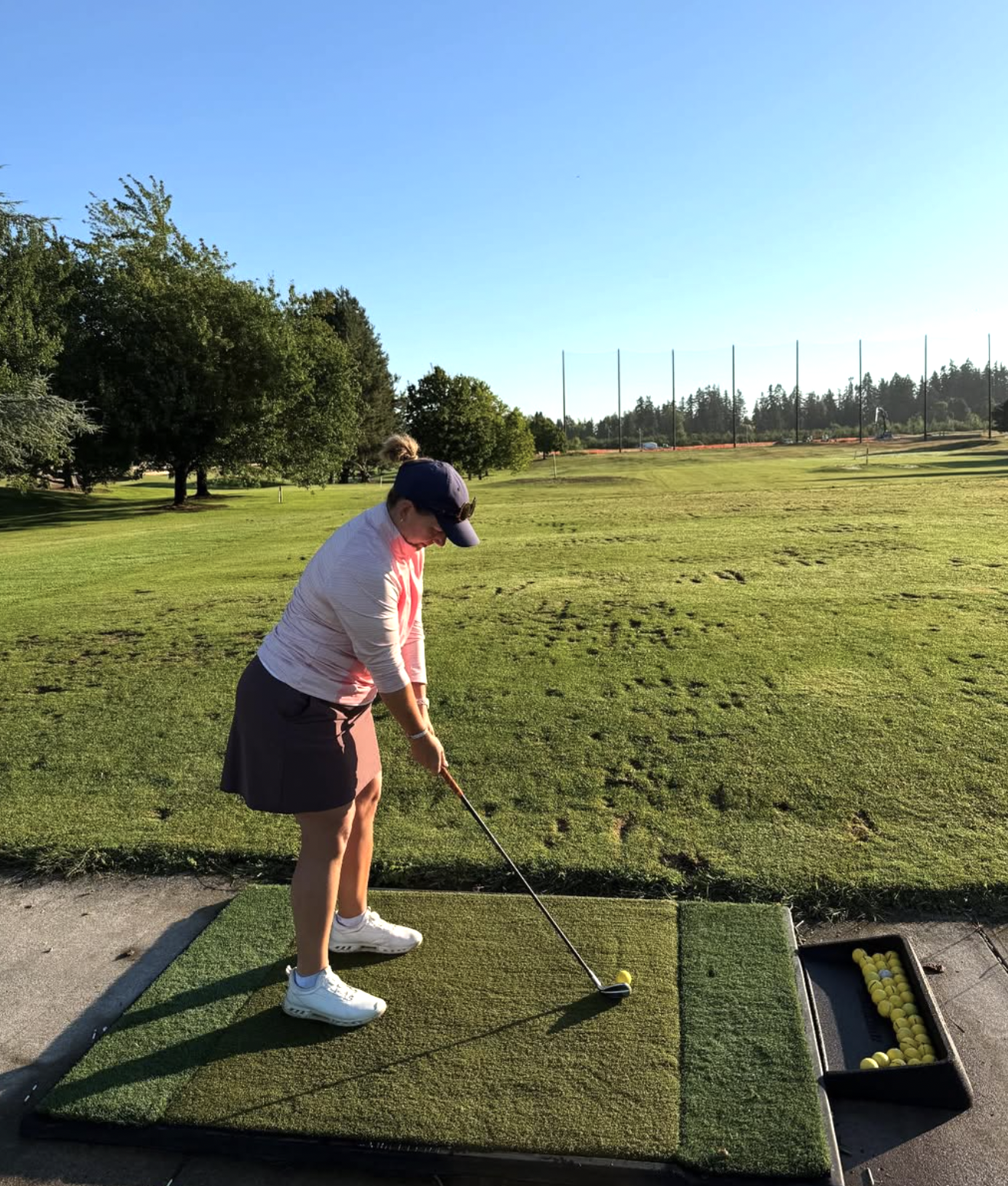
By Sara Griffin, PGA
One of my favorite places in golf is the driving range — not because of perfect swings or beautiful ball flights, but because of what happens when someone arrives for the very first time. Without fail, someone doesn’t know where to get a token or key for the ball machine. Someone always forgets to hang the basket on the hook to catch the balls, turning the range into an unexpected Easter egg hunt. It makes me smile every time.
Those small moments say so much. Coming to the driving range for the first time — any driving range — can be intimidating. They are rarely well-marked, and unless someone tells you what to do, you don’t know where to go, how to get balls or where you belong. Once that initial uncertainty is removed, the range becomes something entirely different: a place of curiosity, confidence and possibility.


One of the greatest gifts we can give new golfers — especially women — is simply helping them feel comfortable showing up. I love sharing the little things that matter: how the ball machine works, where to stand, what to expect. With today’s technology, every facility can easily offer a short video, reel or QR code that explains the basics. When people know what to do, they’re far more likely to come back.
Once they’re settled into a stall, the real self-discovery begins. The driving range is where players start to learn what they like, what they don’t like and what feels natural in their hands. I love helping beginners understand that there is no single “right” place to start. You get to choose the clubs that feel comfortable to you.

I often encourage players to begin small — small swings, small effort and a simple goal: make contact and let the ball move forward and hopefully get into the air. If you can do that, you’re already winning. When someone becomes comfortable with just three or four clubs, they can have a lot of fun on the range — and on the golf course.
For example, if a player feels good with a 7-iron, a hybrid and a driver, they’re in great shape. Add a putter, and you can absolutely go play golf. Those three clubs also naturally teach different distances, ball positions and postures, giving players valuable awareness without overwhelming them.

Posture, in particular, is one of the most important — and most awkward — concepts in golf. Many people, especially women, feel uncomfortable bending forward or setting their body in an athletic position. I explain posture in simple, visual terms: with irons, the arms hang more naturally and closer to the body; with the driver, the body is taller and more extended; and with a hybrid, you find something in between that feels balanced and confident.
When women understand that posture changes with each club, and that there’s nothing wrong with feeling awkward at first, they relax. Showing them what they actually look like is incredibly powerful. Most are surprised to realize they don’t look strange or silly at all. Acknowledging that golf is awkward removes so much pressure and makes them far more willing to try again.

I also encourage players to look around the range. This is one of my favorite moments as a coach. They quickly see that everyone looks a little awkward in posture and that no two swings look the same. Women, in particular, worry deeply about how they look and who might be watching them. Once they realize that everyone else is focused on their own swing — and that everyone looks a little goofy — it’s incredibly freeing.
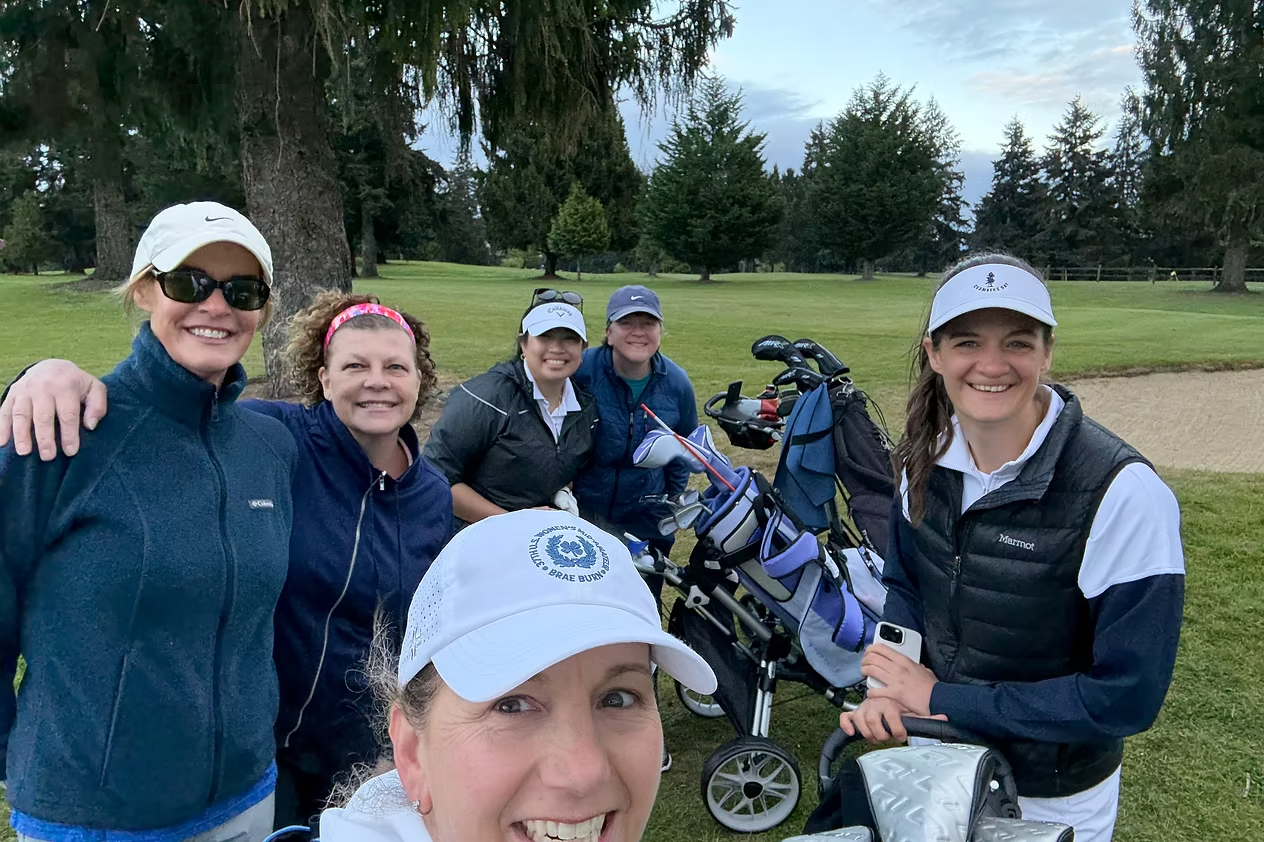
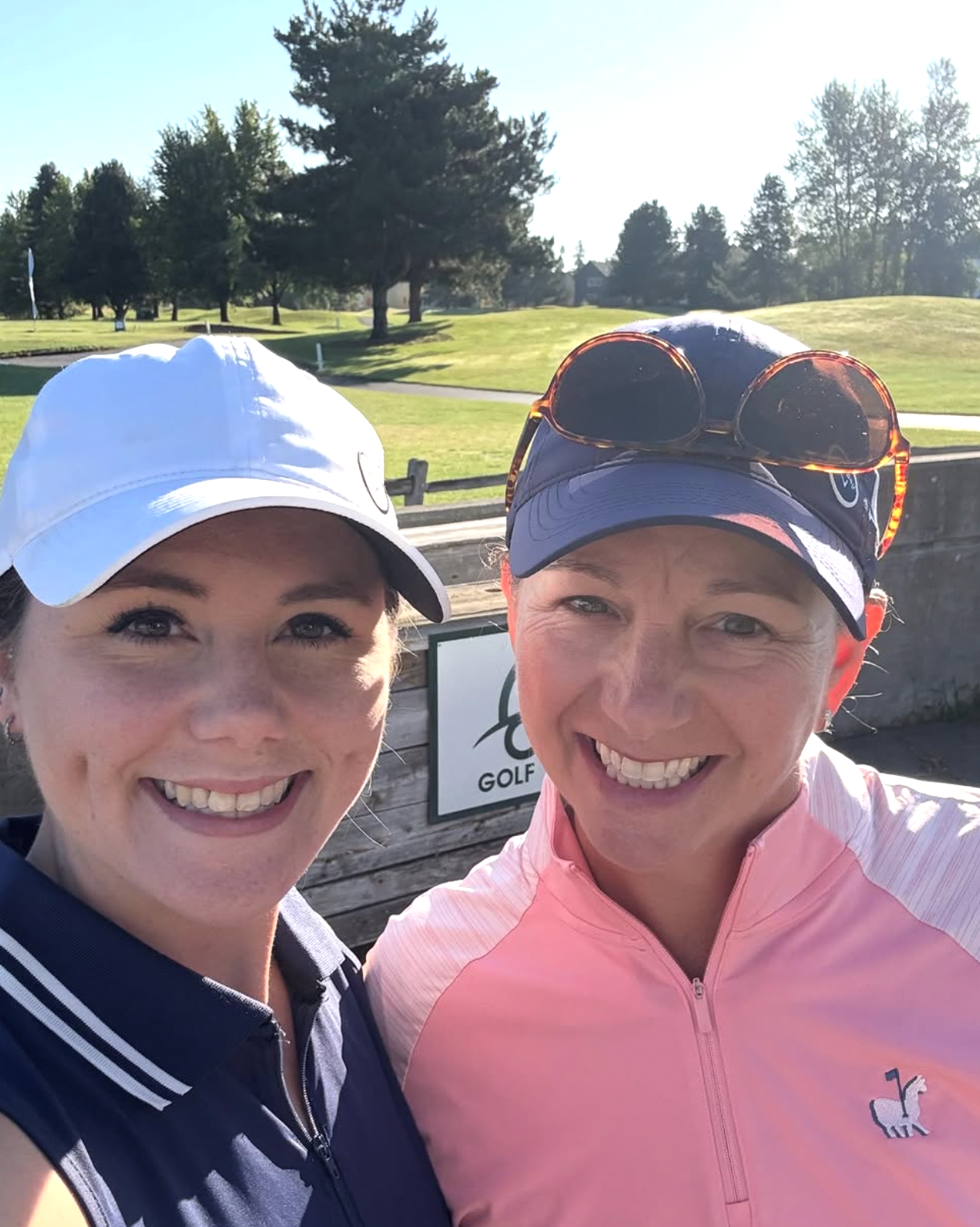
Bringing women together on the range amplifies this effect. In a group, the energy shifts. Women become each other’s best cheerleaders. Alone, we can be our own harshest critics, replaying every mistake in our minds. With encouragement around us, it’s much harder to spiral into self-judgment.
My students laugh because I say “It’s okay” more than anything else on the range. And I mean it. Every swing has something positive in it. Maybe it sounded solid, went straight, stayed in bounds or simply didn’t knock them off balance. Finding one good thing in every swing changes the entire experience. When we focus on what’s working, more good things tend to follow.
The driving range is also a wonderful place to prepare people for the reality of playing golf. I always ask students to save their last 8–12 balls and hit each one with a different club, simulating the flow of the game. Driver, hybrid, iron, then a chipping motion. Each shot requires a new grip, posture and intention, just like on the course.
We don’t get to hit an entire bucket on the first tee and choose our best shot. Practicing this way helps players feel prepared instead of surprised. They begin to notice how far they stand from the ball with a driver compared to how close they are with an iron. The contrast alone is eye-opening and builds awareness that translates directly to the course.

When people are having fun on the driving range — and recognizing the things they’re doing well — they’re far more likely to return. Golf mirrors life in countless ways. There are bumps, mishits and moments when we don’t look our best. If we can laugh, stay curious and keep going, both golf and life become a lot more enjoyable.
The driving range isn’t just a place to hit balls. It’s where people learn patience, confidence, resilience and self-compassion. When we create welcoming, encouraging environments, we give golfers the chance to discover not just the game, but who they are within it.
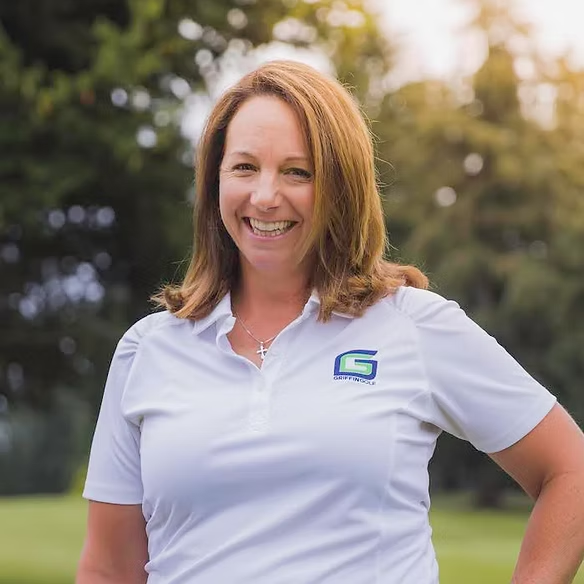
Sara Griffin, PGA, is the co-owner and PGA of America Director of Instruction at Griffin Golf Studio in Sumner, Washington. She and her husband, Chris, also a PGA of America Golf Professional, have both been recognized by Golf Digest as Best Teachers in the State. Sara is also a former Division I & III head golf coach and lifelong educator. She is passionate about developing players of all ages through joy, encouragement and long-term player development. Sara is a nationally recognized leader in junior and women’s golf and continues to compete while mentoring the next generation of PGA of America Golf Professionals.



