
By Vinnie Manginelli, PGA
When it comes to practice, doing so with a purpose is a key to timely game improvement. Most amateur golfers don’t have time to beat balls for hours on the range. Their practice time must be planned and deliberate. They may frequent their local driving range several times per week, but their sessions are often limited, so working on specific aspects of their game, perhaps determined after a lesson with their pro or a recent round of golf, is vital.


Chuck Scoggins, the 2001 and 2013 Georgia PGA Section Youth Player Development Award winner and Golf Range Association of America (GRAA) Elite Growth of the Game Teaching Professional, says “I ask the question, ‘How do you know you’re getting better if you’re not practicing properly?’”
Scoggins, the PGA of America Director of Instruction at the North Georgia Golf Academy at Hamilton Mill Golf Club and the Trophy Club of Apalachee in Dacula, Georgia, says it is important that he sees steady improvement among his students and increased enjoyment in the game.

“I teach my students to practice like they play,” he explains. “I instruct them to hit a drive in the designated fairway on the range. Then hit an iron to a specific target that represents your approach shot.”
Scoggins has them chip to a target in front of them if they’ve missed the green or other range target, and even has students practice the subsequent putt on an adjacent practice putting green (if available) to conclude the hole.


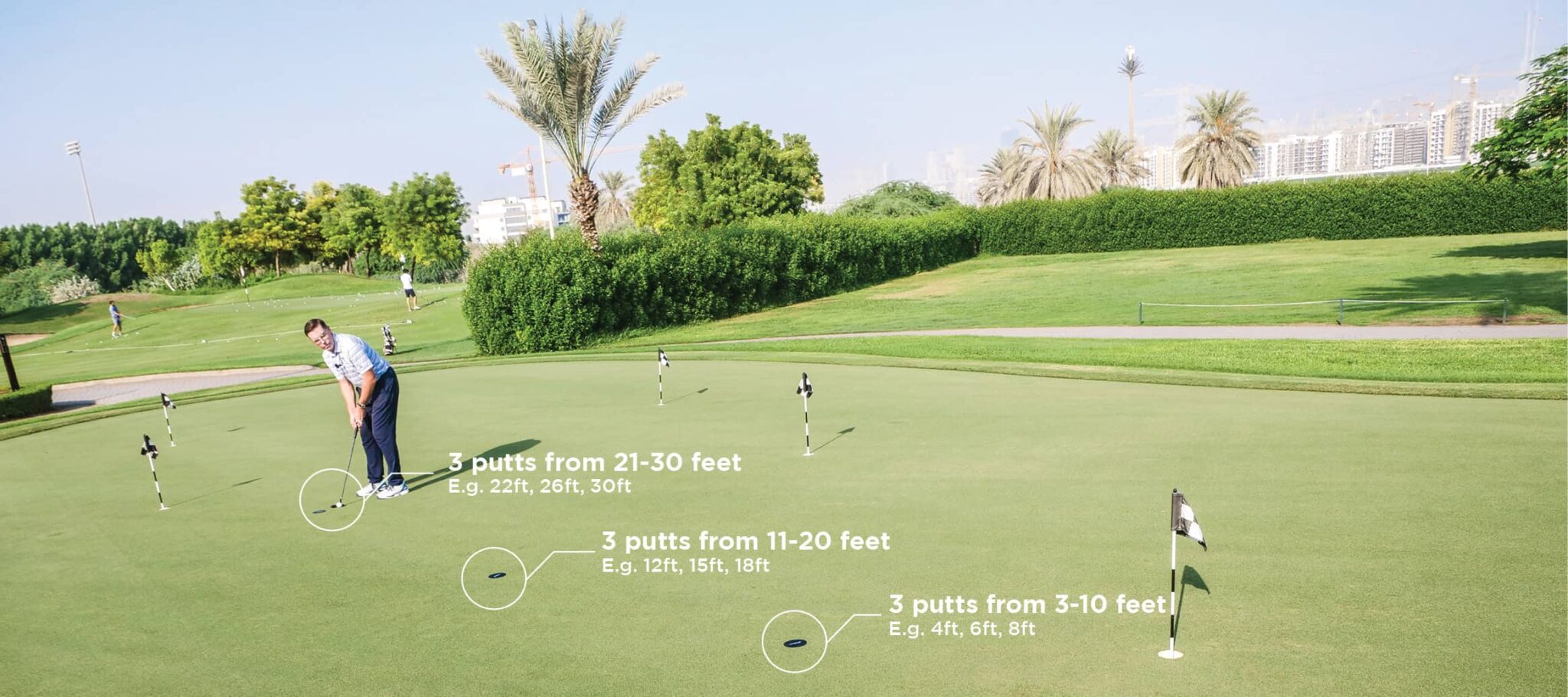
“The proximity of the practice putting green to the range might not allow this, so you may have to save your purposeful putting practice for later. I teach them to play different putting games with putts of various lengths, breaks and undulations,” Scoggins adds.
An essential principle of purposeful golf practice includes creating a comprehensive plan based on desired goals. For instance, instead of hitting a super jumbo bucket of balls, hit a fraction of those shots to specific targets recreating on-course scenarios faced where the game means the most, on the field of play.

Other thoughts for a practice session might be to improving iron contact, narrowing driver dispersion, working on your distance control or increasing your swing speed. Golfers should seek out a personal trainer or golf-specific fitness expert to put a plan in place.
When practicing on the putting green, start putts from just a few feet away and increase the distance accordingly. Practice putting to improve the two vital factors — distance and direction. Work on your green reading skills and put those skills to the test. Use data to gauge improvement and monitor progress. Whether on the range or the putting green, this information is available through today’s state-of-the-art golf technology. If no tech is available, use a notebook. Document your practice results, and set goal to improve on them in later sessions. How many putts in a row did you make from three feet, six feet, nine feet and more? Utilize alignment sticks to ensure correct setup and aim. Use video to confirm that what you’re feeling matches what’s really happening in your full swing, chip shot or putting stroke.

 Avoid hitting dozens of shots in a row with the same club. Instead, use Scoggins’ Smart practice method of simulating a real round of golf by changing clubs, targets and shot types to build adaptability.
Drills are also important to purposeful practice. Implement structured practice routines, such as:
- The “Ladder” Warmup: Start with short, half-swings with a wedge, focusing on turf interaction, then move through 7-iron, hybrid and driver, gradually increasing swing intensity.
- Simulate Fairways: Select two flags to represent a fairway and count how many drives out of 10 land in that zone.
- Short Game Challenges: Place a target and try to get 20 “up-and-downs” from around the green. If you miss, start over, or set a percentage goal to make it harder as you improve.
Having clear objectives when setting out to the driving range is important.
“Beating balls to one target is not valuable,” Scoggins reiterates. “Pick three targets — left, center, right — and go through your pre-shot routine before each shot. If you notice a pattern where most of your shots are consistently going left or right, consider taking an extra look at your setup before swinging. Educating students on this purposeful practice concept is just as valuable as the time you spend together in the lesson itself. This concept strengthens the golfer’s mental game, providing structure that incorporates everything they do on the golf course. We have to show our students how they’re going to get better by practicing smarter on the driving range. Then we have something that we can build on, leading to increased retention and an ever-growing teaching business.”



