
A Conversation with Cameron Robinson, PGA
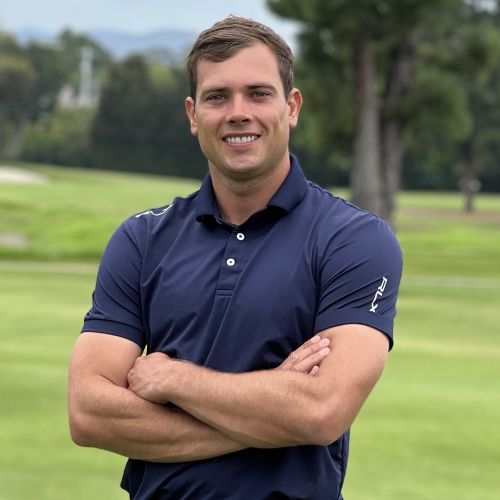 Cameron Robinson is a dual PGA Professional of the PGA of America and the PGA of Great Britain & Ireland, and the Head Golf Professional at Brentwood Country Club in Los Angeles, California. He specializes in concept-driven coaching approaches that give players ownership of their solution options without technical overload and regularly uses real-life coaching case studies when working with competitive players and other PGA Professionals.
In modern private club environments, PGA of America Golf Professionals often balance instruction alongside operational responsibilities. Lessons take place within defined windows, while players arrive with different backgrounds, expectations and playing histories.
For Cameron Robinson, studying lessons through coaching case studies has become a useful way of creating clarity within that environment. Robinson, Head Golf Professional at Brentwood Country Club in Los Angeles and a dual member of the PGA of America and the PGA of Great Britain & Ireland, regularly reflects on lessons from the club environment while occasionally sharing those insights through industry publications.
Having worked in club environments in both the United Kingdom and the United States, Robinson has found that while facilities and operations may differ, one thing often remains the same: golfers tend to improve fastest when coach and player develop an understanding of ball flight and impact.
In this conversation with Golf Range Magazine, Robinson discusses how he studies lessons and why reflecting on the coaching process has become an important part of his professional development.
Golf Range Magazine: How did your interest in building coaching case studies begin?
Robinson: It developed gradually through coaching. Early in my career I became interested in understanding not just what improved in a lesson, but why it improved.
One of the more influential experiences was a year-long coaching study led by Hugh Marr and Simon Jenkins through The Coach Mastery Programme. The program began by exploring the history of golf coaching and the philosophies that shaped modern instruction. From there, we looked at coaching personalities, values and the mentors and experiences that influenced our thinking.
As the course progressed, the work became more practical. Coaches began mapping out how they approached lessons and reflecting on how those ideas appeared in real coaching environments. For me, that process helped bring structure to many of the things I had already been learning through coaching and playing. As part of the program, we were asked to build our own coaching system. The framework that came out of that work eventually became what I now refer to as Genuine Solutions. In many ways The Coaching Mastery Programme study helped organize and clarify the approach I had been working towards.
Golf Range Magazine: What role have mentors played in shaping this approach?
Robinson: A significant one. Throughout my career I’ve been fortunate to spend time around experienced PGA Professionals and coaches who approached instruction with a clear process. Many of the mentors I’ve learned from, and continue to learn from, have a deep understanding of ball flight and impact. They often seem to have a clear sense of what needs to change to influence the desired shot. Having worked within club environments in both the United Kingdom and the United States, I’ve also seen how those principles translate across very different golfing cultures.
My own playing journey also played a role. Like many professionals, you spend years trying to understand your own ball flight and performance. In many ways your own game becomes a lifelong case study.
Golf Range Magazine: How do you begin understanding a player when a lesson starts?
Robinson: The starting point is always the player. I generally try to follow a sequence along these lines:
1. Understand the player – This usually begins with a conversation or short questionnaire covering playing history, previous sports, practice habits and how the player describes their typical ball flight.
2. Identify the north star (main goal) – From there we try to identify the desired ball flight the player is aiming to produce. That goal can look different from player to player, but it is always built around the individual and what they are trying to achieve.

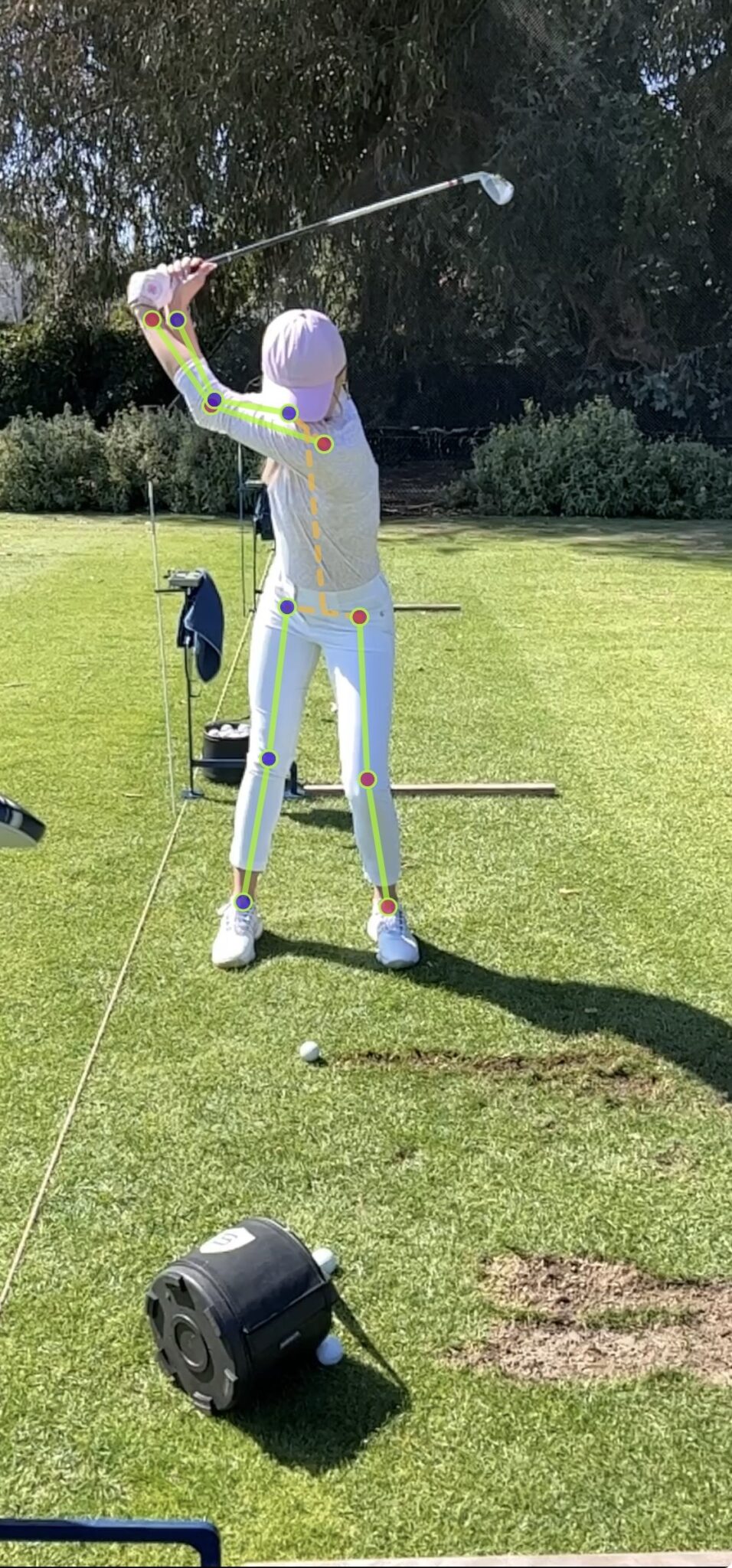
3. Observe the current flight – Once that goal is clear, we look at the player’s current ball flight and establish the tendencies that appear, particularly when a little pressure is introduced. For experienced golfers, that may show up in tournament play. For others, it may simply appear when they move from the range onto the course.
4. Conceptual Understanding – From there the conversation often moves toward a concept goal that connects the desired ball flight with what the player is currently experiencing. Sometimes that concept is quite simple (ideally so), though simplicity is always subjective to the player. The value lies in what the concept allows the player to produce at impact in order to reach the desired ball flight.

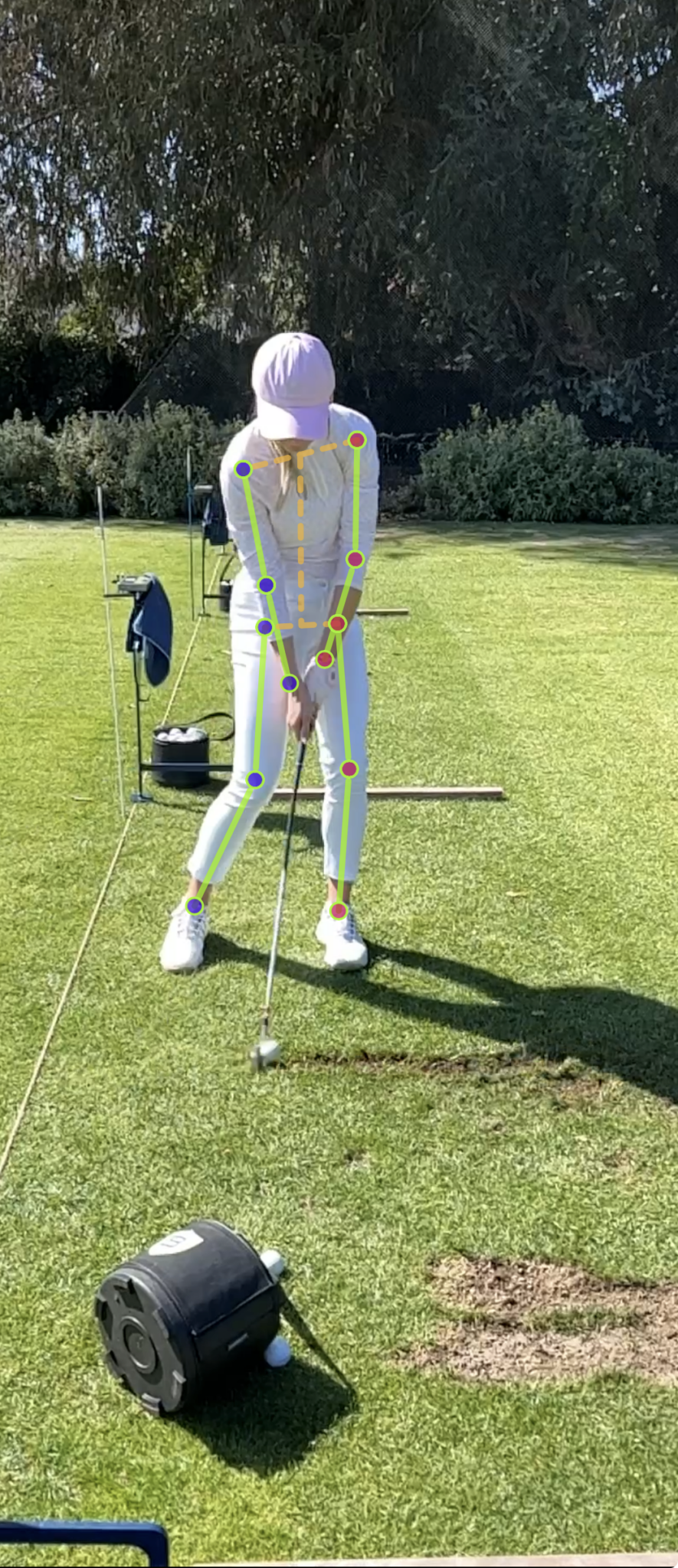

5. Explore Solution Options – Solution options are not always explicit technical instructions. Depending on the player, they may involve a drill, a small set-up adjustment, an equipment change, an external focus on a target or another task that helps the player organize movement differently.
More explicit instruction can be useful at times, particularly with newer golfers or those still building their understanding of the game or refining a skill. But in many cases, the aim is to avoid unnecessary overload and allow the player to work things out through the concept.
A simple example is aiming at a target. In some lessons, the concept between coach and player might simply be how the player intends to aim and organize themselves relative to that target.
Two golfers can stand on the same range looking at the same flag yet organize themselves very differently. One may rely on an intermediate target on the ground, whereas another may visualize shot shape, while someone else may work more from alignment or feel.
Something that looks simple on the surface can become quite individual once you begin exploring how a player interprets it. That is why a player-centric approach matters.
In my experience, the better the understanding between player and coach, the better chance the player has of improving impact without unnecessary overload.
Improvement is rarely perfectly linear, and not every idea works immediately. But when the player starts discovering something that works for them, that often becomes the golden nugget of the lesson. Those discoveries tend to stay with the player.

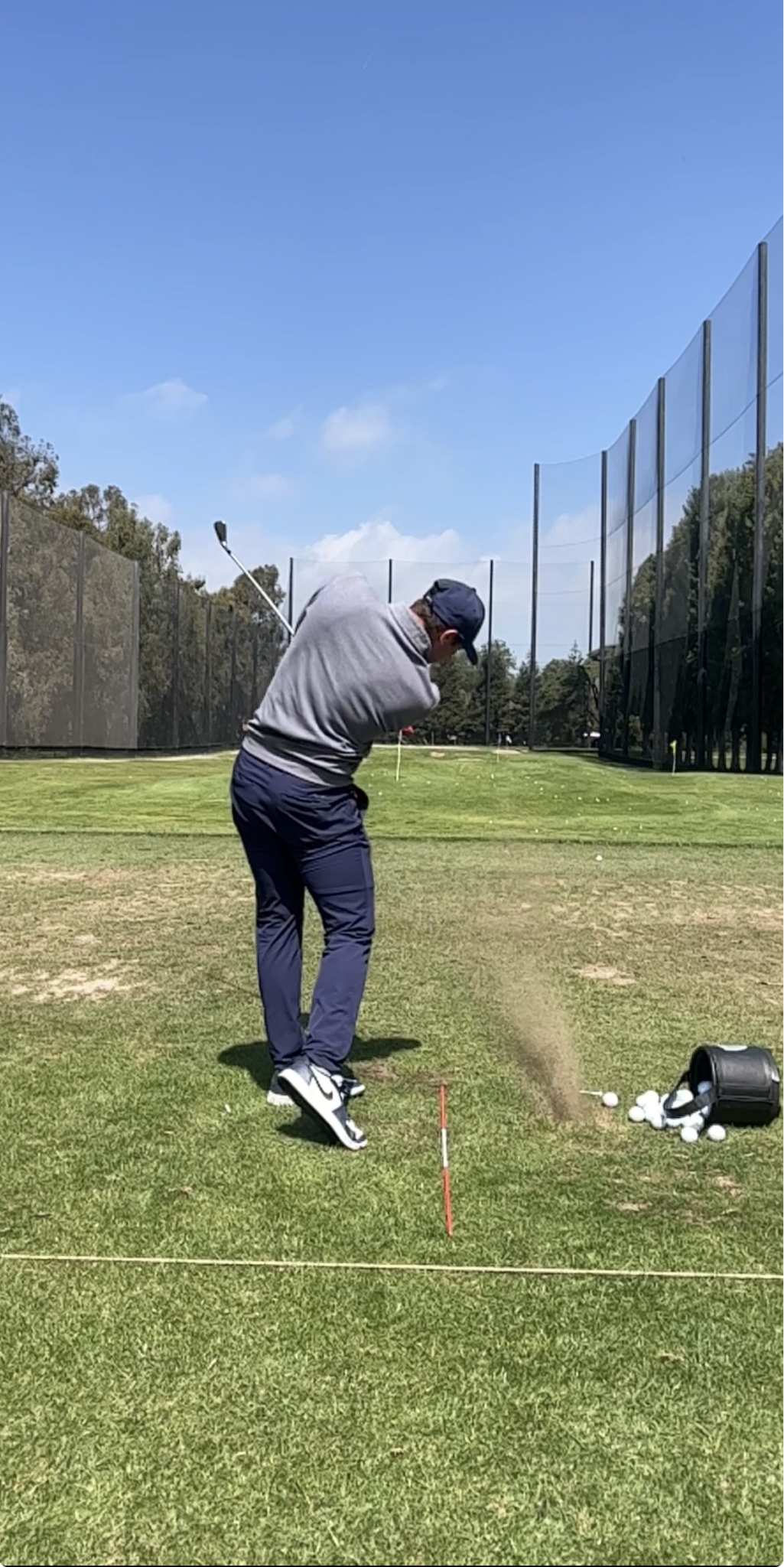

Golf Range Magazine: What does a typical case study look like once that process begins?
Robinson: Most case studies begin by documenting the player’s intent and current ball flight.
From there the next step is identifying the impact factor or factors influencing the shot, though how much of that information is shared often depends on the stage of the learner.
The goal is not to overload the player. It is to create enough conceptual understanding that the player has a genuine chance to explore possible solutions. That is what makes these lessons worth documenting. You begin to see how understanding, intention and discovery can come together in different ways depending on the player.
Golf Range Magazine: How does this player-centric approach influence learning?
Robinson: One thing that becomes noticeable through these case studies is that improvement often happens a little faster when the player is actively involved in the process.
When golfers understand the relationship between ball flight and impact, they often begin exploring ideas with more confidence. The coach still guides the process, but the player becomes part of the discovery.
What’s interesting is that this can apply to golfers from many different backgrounds. Some arrive with strong sporting backgrounds, while others may be relatively new to sport entirely.
When coach and player align around the intended ball flight and the concept behind it, many players begin to see how small adjustments to their existing tendencies can influence the shot. Quite often golfers arrive with tendencies that already work and can be preserved rather than rebuilt. Players are often better than they think, and too much technical change can sometimes create unnecessary overload. The variety of swings we now see at the highest level of the game is a good reminder that there are many effective ways to move the club.
Golf Range Magazine: What value do these case studies provide other PGA Professionals?
Robinson: They provide context. Instructional ideas are often discussed conceptually, but seeing how a lesson unfolds — the questions asked, the observations made and the options explored — can help coaches understand how those ideas may work in practice.
While every player is different, the process of clarifying intent, understanding ball flight and exploring solutions tends to repeat itself across many lessons. That’s why documenting those journeys can be useful.
Golf Range Magazine: Do you see yourself continuing to build these case studies?
Robinson: Yes, I think so. They’ve become a helpful way to reflect on coaching and occasionally share practical insights with other professionals.
Golf instruction is always evolving, but the process of observing lessons, reflecting on what occurred and learning from those experiences remains one of the most valuable tools a coach can have. For me, these case studies are simply a way of continuing that process.



